Landing Gear System
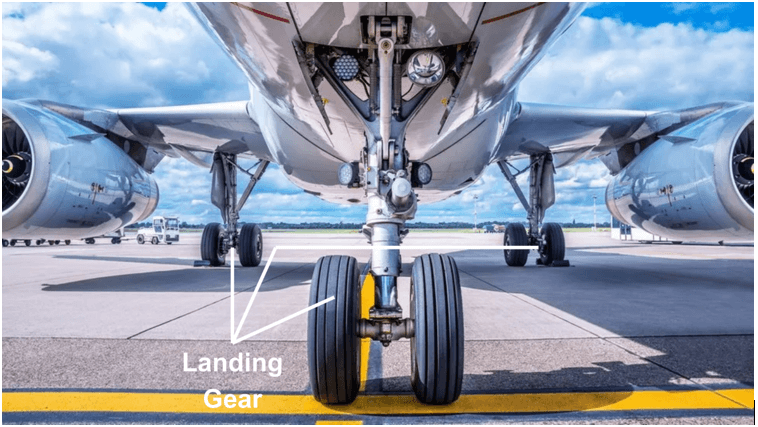
Landing Gear System Have you ever looked out of an airplane window and marvelled at the complex machinery supporting the aircraft as it lands gracefully on the runway? The wheels, struts, and gears build up an aircraft’s landing gear system. They play a vital role in ensuring a safe touchdown. Imagine the intricate mechanisms working seamlessly to support the aircraft’s weight during take-off, landing, and taxiing.This comprehensive guide will delve deep into this vital aspect of aviation technology. Let’s demystify the fascinating world of landing gear systems, unravelling their complexities step by step. Discover how these systems are engineered to withstand tremendous forces while providing stability and control. We have it covered, from the different types of landing gear designs to the maintenance practices that keep them operating smoothly. So, prepare to elevate your knowledge and appreciation for the mechanical mastery that keeps planes safely grounded. Introduction to Landing Gear System An essential element of an aircraft, the landing gear system, also known as the undercarriage, assumes the responsibility of carrying the airplane’s weight when it is not in flight. It is the first structure to touch the runway during landing and the last to part ways as the aircraft takes off.At its core, a landing gear system comprises a structure that supports the aircraft while it is on the ground. This structure performs several essential functions, such as bearing the total aircraft weight during ground operations, providing traction, and absorbing the impact during take-off and landing. Types of Landing Gear Systems They normally include a variety of wheel layouts, including conventional, tandem, and tricycle types. Furthermore, landing gear systems can be fixed or retractable. 1. Fixed Landing Gear As the name suggests, the fixed landing gear is permanently attached to the aircraft. It remains extended and exposed, whether the aircraft is on the ground or in the air. Fixed landing gear is simple to repair. It is used on small airplanes and constructed of two wheels that protrude outwards on inclined axles from the front-center part of the fuselage. While fixed landing gear is a simple, low-maintenance, and cost-effective solution, it has some significant downsides. For example, the stationary nature of the landing gear generates constant drag, limiting aerodynamics and reducing fuel economy. 2. Retractable Landing Gear Retractable landing gear is a popular component caught on commercial airliners and high-altitude aircraft. This type of landing equipment can be folded or stowed inside the aircraft while in flight. One of the advantages of retractable landing gear is its ability to reduce drag, enhance aerodynamics, and improve the overall cruising speed and aircraft’s glide distance. Depending on the airplane structure, they can be operated electronically, manually, or hydraulically. The mechanism behind this type of landing gear typically involves a series of gear actuators, gear extensions, pumps, and gear switches. It is worth noticing that retractable landing gear adds weight to the aircraft, which is why they are mainly installed on commercial airliners or gigantic planes that can handle and maintain it. They are more complex and costly when compared with other types of landing gear. 3. Tricycle Landing Gear Tricycle landing gear is the most general type in general aviation airplanes. They are particularly used for small to large-sized ones. They comprise two primary wheels positioned beneath the fuselage, with a third wheel typically located towards the front or nose of the aircraft. While tricycle gear may be slightly heavier when compared to other landing gear types, it offers numerous advantages for smaller aircraft. For instance, it enhances steering capabilities, promotes stability during take-offs and landings, and reduces the risk of ground loops. Fixed tricycle gear often includes fairings installed over each wheel to improve aerodynamics and overall speed. Also, tricycle gear can be retractable. The retractable tricycle gear designs involve the two main wheels retracting into the fuselage or under the wings while the front wheel retracts into the nose. Retractable tricycle gear aids in reducing drag and further enhancing aircraft performance. 4. Tandem Landing Gear The tandem landing gear system is a configuration used in aircraft to provide stability and support during take-off, landing, and taxiing. This system consists of two landing gear units located one behind the other, with the forward unit typically positioned under the fuselage and the rear unit under the tail. The purpose of this arrangement is to distribute the weight of the aircraft evenly across both gear units, ensuring a balanced and stable landing. This configuration also allows for better maneuverability on the ground, as the airplane can pivot around the rear gear unit during taxiing. 5. Conventional Landing Gear This type of landing gear, also known as a taildragger, features two main wheels towards the front of the aircraft and a smaller wheel or tailwheel at the rear. It provides good ground clearance, making it suitable for rough or unimproved runways. 6. Floatplanes and Ski Landing Gear Floatplanes replace traditional wheels with large floats or pontoons, enabling them to take off from and land on water. On the other hand, ski-equipped aircraft swap out traditional wheels for skis, allowing them to land on snow and ice. 7. Bogie Landing Gear Bogie undercarriages are an essential component of an aircraft’s landing gear system. The word “bogie” refers to a set of wheels attached to a framework. It provides support and stability to the aircraft during take-off, landing, and taxiing. They are designed to distribute the aircraft’s weight evenly across multiple wheels, reducing the stress on individual tires and providing better traction and stability on various types of terrain. Commercial airliners typically have multiple bogie undercarriages noticed along the fuselage length, while smaller aircraft may have a single near the center of gravity. The number of wheels in a bogie can also vary, with larger aircraft usually having more wheels for increased stability. Components of a Landing Gear System The landing gear system consists of several components, including Struts Struts, also known as shock absorbers, are critical components that absorb the impact forces during